
Blog
From Birdland to the Fillmore: Jazz on Changing Stages
Nov
A jazz poster can preserve two names at once: the performer and the place. Birdland, for instance, evokes a New York club as well as the musicians who appeared there.
These posters associated with 1950s and 1960s jazz venues suggest a journey from nightclubs to a centre and an auditorium, tracing the different settings in which audiences encountered the music.
Birdland and the pull of a star bill
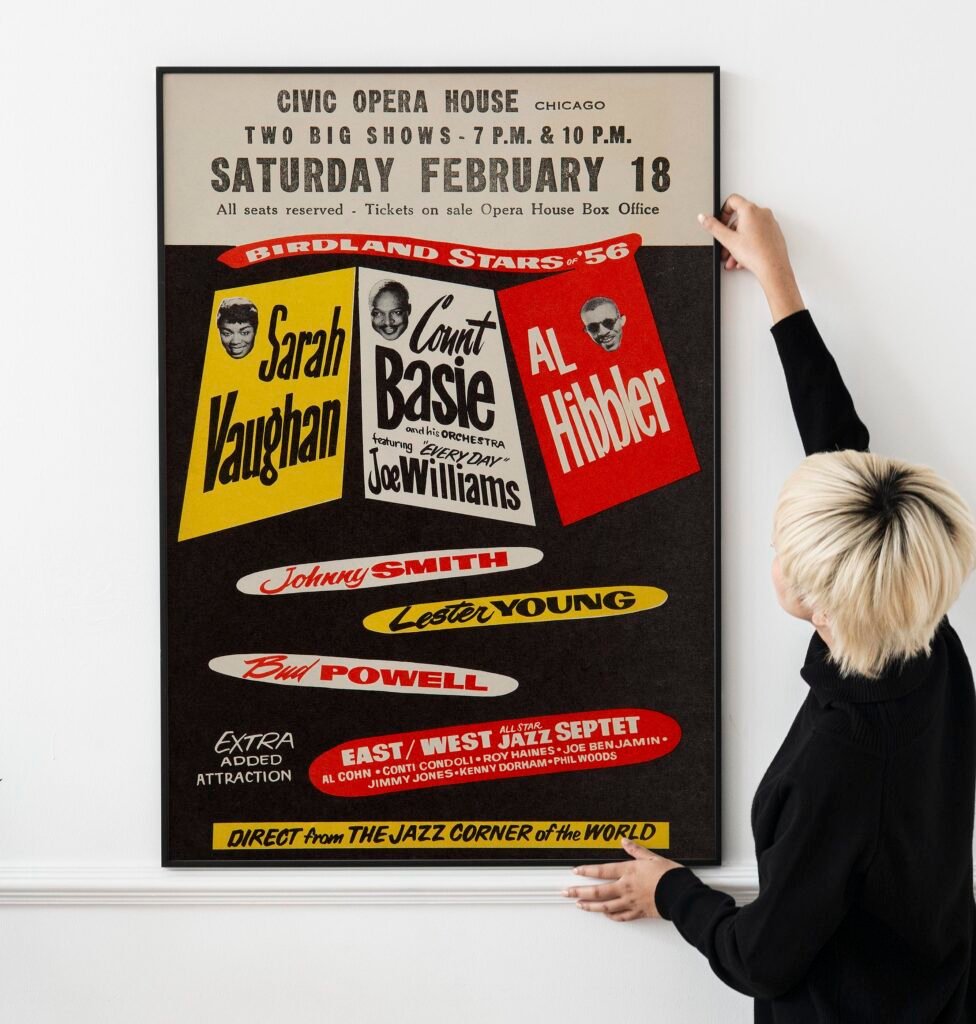
Birdland’s very name belonged to jazz: the New York club took it from Charlie Parker’s nickname, Bird. It became associated with a succession of major performers, making the club’s identity part of the attraction alongside the musicians on its bills.
The catalogue’s Birdland Stars of 1956 poster names Sarah Vaughan, Count Basie and Joe Williams. The combination suggests how a bill could bring together different musical personalities: Vaughan’s singing, Basie’s bandleading and Williams’s voice each carry their own associations.
A poster for a club like Birdland did more than announce an address. The venue name gave readers a setting for the performers, while the performers gave the venue its charge. Whether a visitor came for a particular singer or for the prospect of an evening at Birdland, the club and its stars advertised one another.
Coltrane and the Los Angeles club circuit
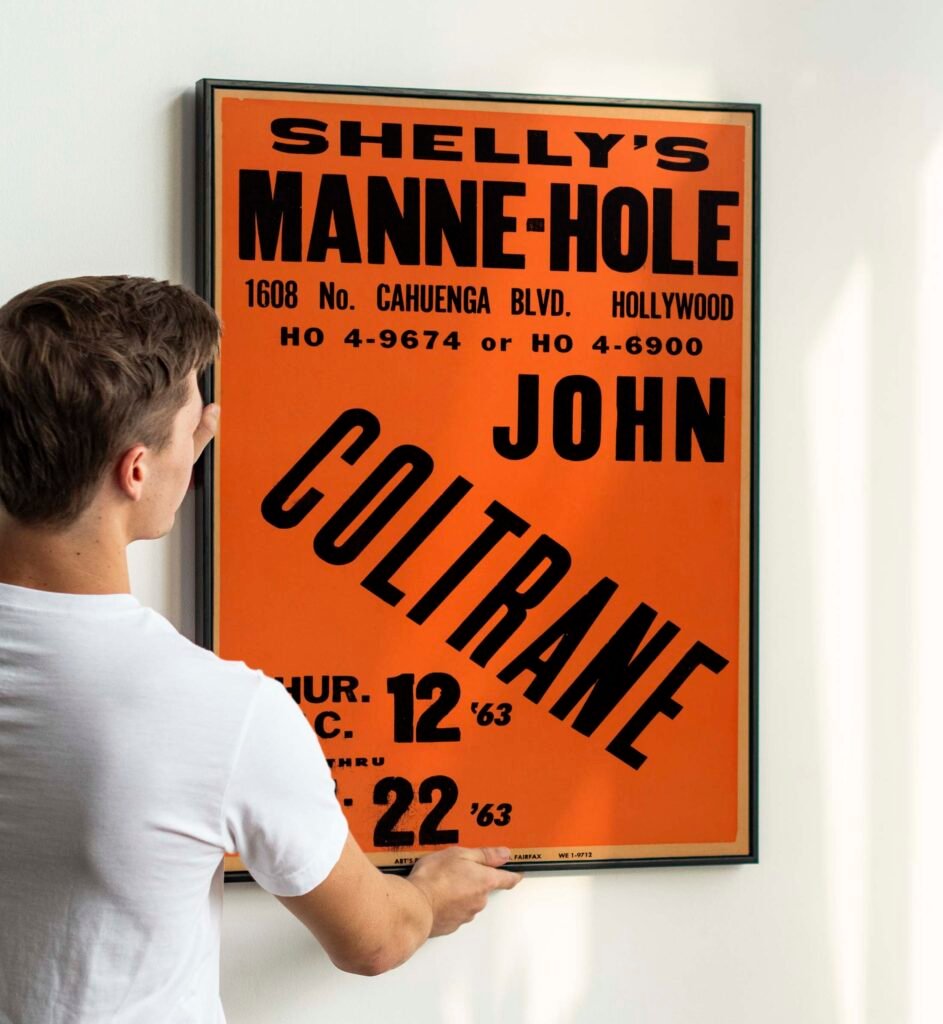
Across the country, the catalogue lists a John Coltrane poster for Shelly’s Manne-Hole, a Los Angeles nightclub, with December 1963 in its title. The listing places a saxophonist now closely identified with musical exploration in the context of a named club engagement.
A nightclub appearance offered a different frame from a recording. On record, the listener could return to the same performance; in a club, the music unfolded in a room shared by musicians and audience. Jazz improvisation made that distinction especially important: a familiar piece could become the basis for a new performance rather than a fixed script.
The poster’s venue name is therefore more than a geographical label. It points to a circuit in which an artist’s work travelled between cities and reached listeners through particular rooms. The separate history of Coltrane and Miles Davis on club posters follows another part of that story.
The Olatunji Center beyond the nightclub
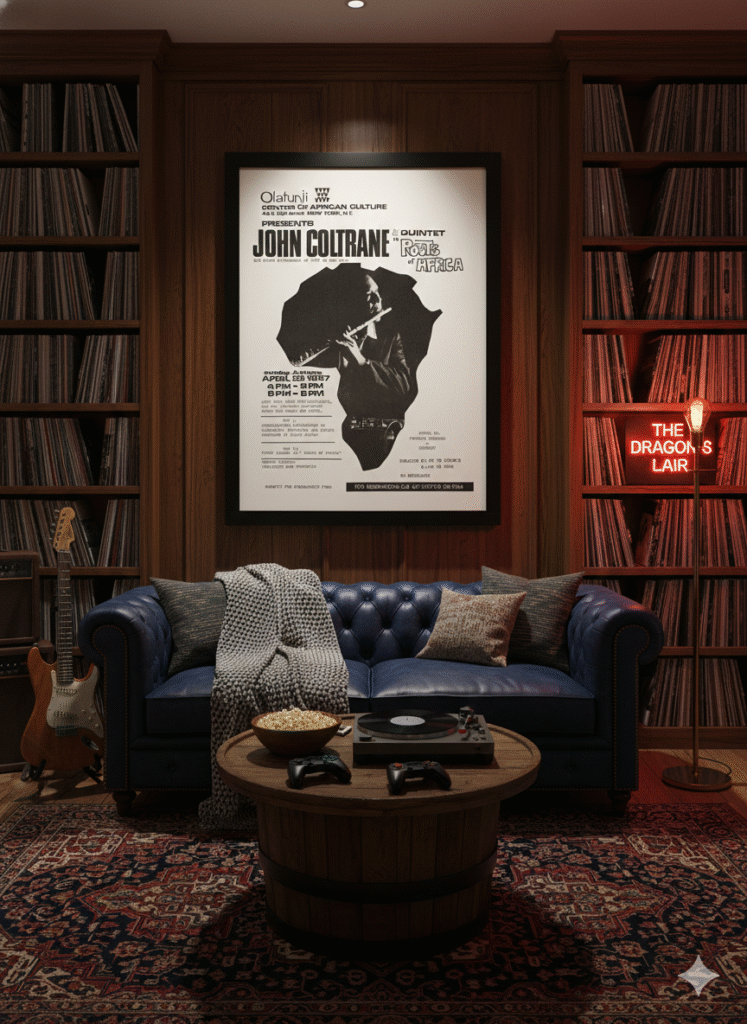
The catalogue’s Olatunji Center Africa Jazz poster names Coltrane and identifies the concert with 1967. It offers a different kind of venue name from Birdland or Shelly’s Manne-Hole: a centre rather than a nightclub.
The distinction matters even without assuming what the room looked like or who attended. A venue’s name can tell a reader how an event was presented, but it cannot by itself establish the atmosphere of the performance. Nor does a poster reproduce the sound of the music.
Coltrane’s later work is widely associated with searching, extended improvisation. The Olatunji listing places his name beside a setting that invites questions about the communities and musical ideas around such performances. Its stated date and bill are details to check against independent historical records, rather than conclusions to draw from the reproduction alone.
Bola Sete and the Fillmore’s wider stage
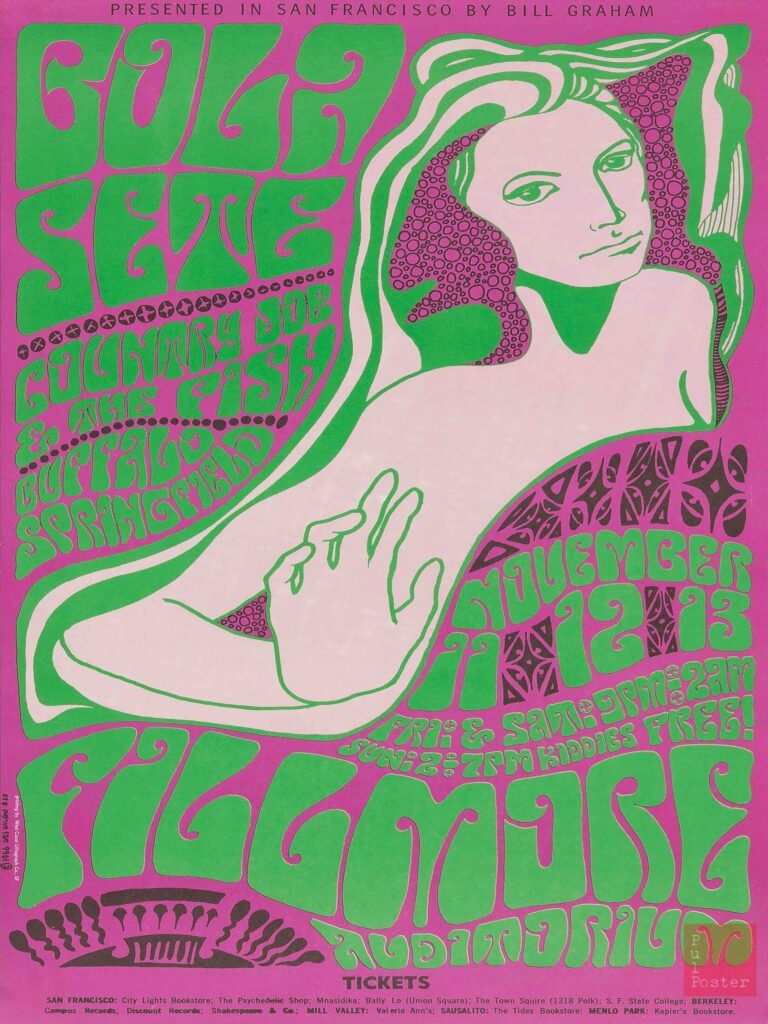
The Fillmore Auditorium is closely associated with San Francisco’s concert culture and with promoter Bill Graham. The catalogue’s Bola Sete at Fillmore Auditorium poster identifies the Brazilian guitarist with the venue and gives a 1966 date.
That pairing complicates any neat division between jazz clubs and the wider concert world. A guitarist associated with Brazilian music could appear on a poster connected to a venue remembered for a broad range of live music. The venue’s reputation tells only part of the story; the individual bill is what gives the setting its musical detail.
Taken together, these listings trace several ways a performance could be presented: through a celebrated club, an artist’s engagement, a centre or an auditorium. They are starting points for exploring those circuits, not complete accounts of what happened on stage. Their enduring interest lies in the meeting of a performer’s name with a place where people might encounter the music.
Shop the collection
 Rare Dizzy Gillespie Retro Concert Poster – 1960s Jazz Festival, Trumpet Icon Price range: $5.50 through $230.00
- Dizzy Gillespie 1960s Jazz Poster – "Concert Under the Stars" Des Moines, Vintage Bebop Poster Art Price range: $5.50 through $230.00
- Etta James Meadow Acres Ballroom Concert Poster (1961) Price range: $5.50 through $230.00
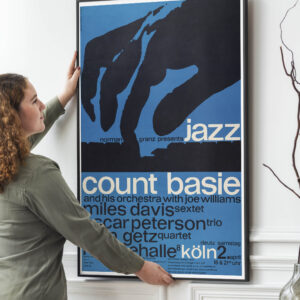
- Count Basie, Miles Davis, Oscar Peterson, Stan Getz, and More 1960 Köln German Concert Poster Price range: $5.50 through $230.00


More jazz on the bill
Explore concert artwork featuring jazz performers and the venues associated with them.