Blog
Fred Astaire, Ginger Rogers, and the Art of Screen Dance – Shall We Dance (1937)
Jan
Shall We Dance (1937): The Gershwin-Fueled Fred & Ginger Classic — and the Poster That Sells the Spark
Released by RKO on May 7, 1937, Shall We Dance arrived near the peak of Hollywood’s golden-age musical boom and stands as the seventh film in the legendary Fred Astaire–Ginger Rogers run. Directed by Mark Sandrich and produced by Pandro S. Berman, it’s a movie built on two irresistible engines: tabloid-style romantic chaos and some of the most polished dance-and-song craftsmanship of the era. Gershwin+1
The story is gloriously of-its-time: Astaire plays a famous “Russian” ballet star whose public image is carefully managed, while Rogers is a no-nonsense American dance star. A publicity mix-up snowballs into a fake-marriage narrative, and the film rides that misunderstanding into a string of comic set pieces, showbiz backstage energy, and—most importantly—dance numbers that feel effortless while being anything but.
What truly elevates Shall We Dance is its music. The score and songs come from George and Ira Gershwin, making this film one of the most famous intersections between Broadway-level songwriting and Hollywood spectacle. Gershwin+1 The movie is packed with standards, including “They Can’t Take That Away from Me,” “They All Laughed,” and the immortal “Let’s Call the Whole Thing Off.” That last song anchors one of the film’s signature sequences: Astaire and Rogers gliding together in a roller-skating routine that became instantly iconic—so iconic that it’s often singled out as the scene people remember first.
There’s also a poignant historical note attached to the film: George Gershwin died only two months after the movie’s release, which gives Shall We Dance an added layer of legacy as one of his final major Hollywood projects. And while the film’s reception at the time was more mixed than some earlier Fred & Ginger hits, its reputation has endured—helped by the fact that “Let’s Call the Whole Thing Off” was later recognized by the American Film Institute in its song rankings.
The Poster: Motion, Glamour, and a Sales Hook in One Image
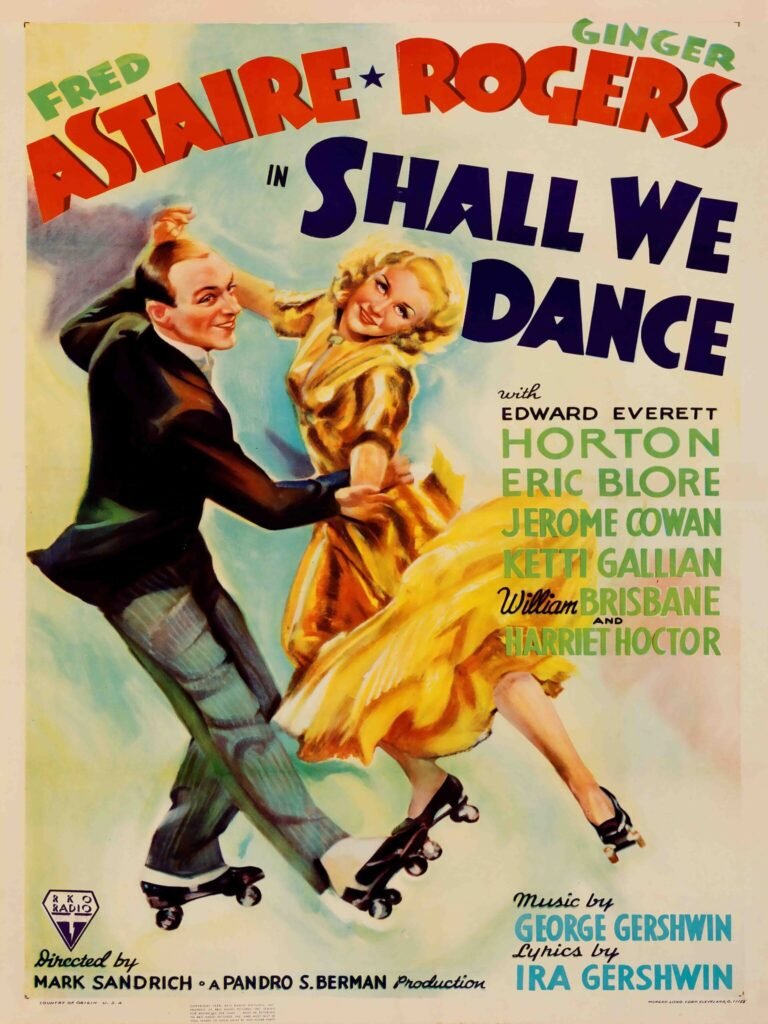
The original theatrical artwork for Shall We Dance doesn’t just advertise a movie—it sells an experience: elegance in motion. One of the most desirable U.S. one-sheet styles is noted for depicting the roller-skate dance, turning the film’s most crowd-pleasing moment into a single, instantly readable promise: you’re coming to see Fred & Ginger do something dazzling.
Visually, the poster leans into classic 1930s studio marketing—bold title treatment, star names as headline attractions, and an image that communicates romance and rhythm at a glance. It’s a perfect example of how golden-age posters functioned as “story shortcuts”: one look and you understand the tone (playful), the genre (musical comedy), and the reason to buy a ticket (chemistry you can practically hear).
Nearly ninety years later, Shall We Dance remains a benchmark for screen dance partnerships—and its poster remains a blueprint for how to capture cinematic joy in a single frame.
