Blog
1932 Davis Cup Poster: Tennis in Art Deco Lines
Nov
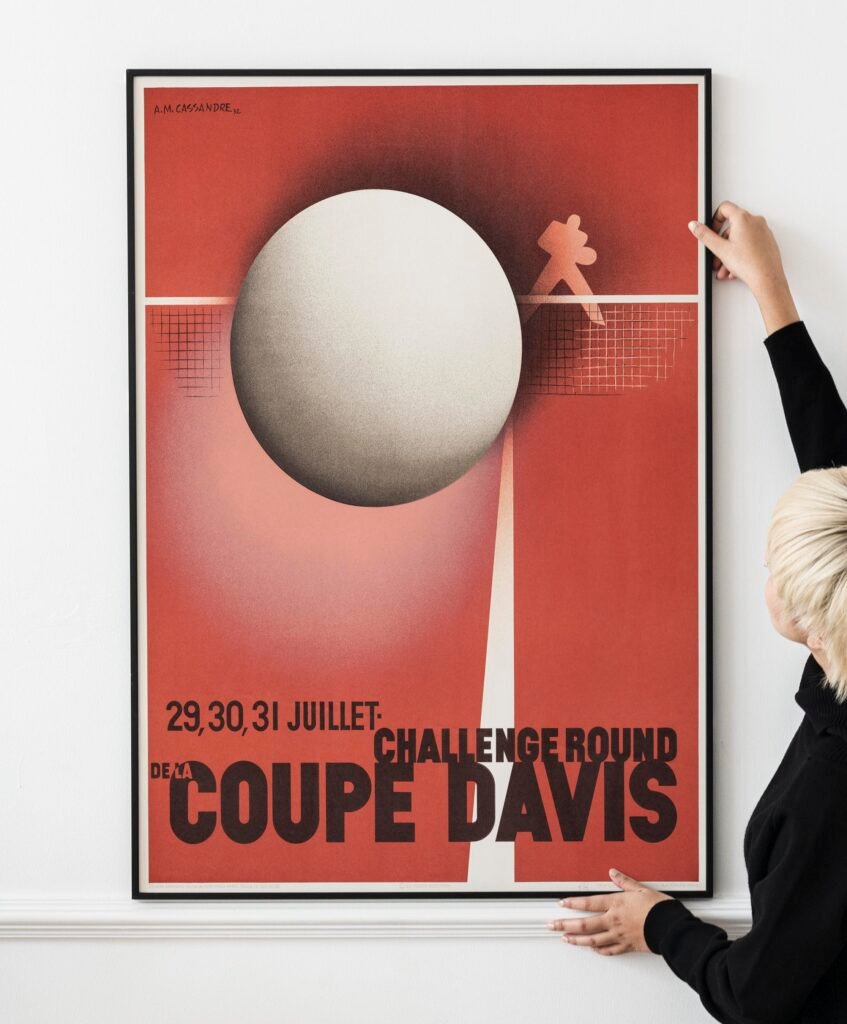
The Davis Cup turns tennis into a contest between national teams. A 1932 Davis Cup poster brings that collective identity into the world of Art Deco event graphics, where a sporting occasion becomes a subject for design.
Its catalogue title points to the Challenge Round, but the precise match and the artist behind the original artwork need further verification.
A team contest in an individual sport
The Davis Cup brings national teams into a sport often remembered through individual champions. That distinction gives its promotional material a different kind of subject: not simply a player at the net, but a contest between teams carrying the identity of their countries.
PulpPoster lists its 1932 Davis Cup poster as a Challenge Round design and associates it with France. Those catalogue details give the artwork a starting point, but they do not establish the teams, venue or match date represented. Nor does the listing identify the designer.
That uncertainty matters. A poster can preserve the identity of an event without supplying every detail needed to reconstruct it. Its lettering and composition deserve attention in their own right, alongside the historical questions they leave open.
Why Art Deco suited the sporting poster
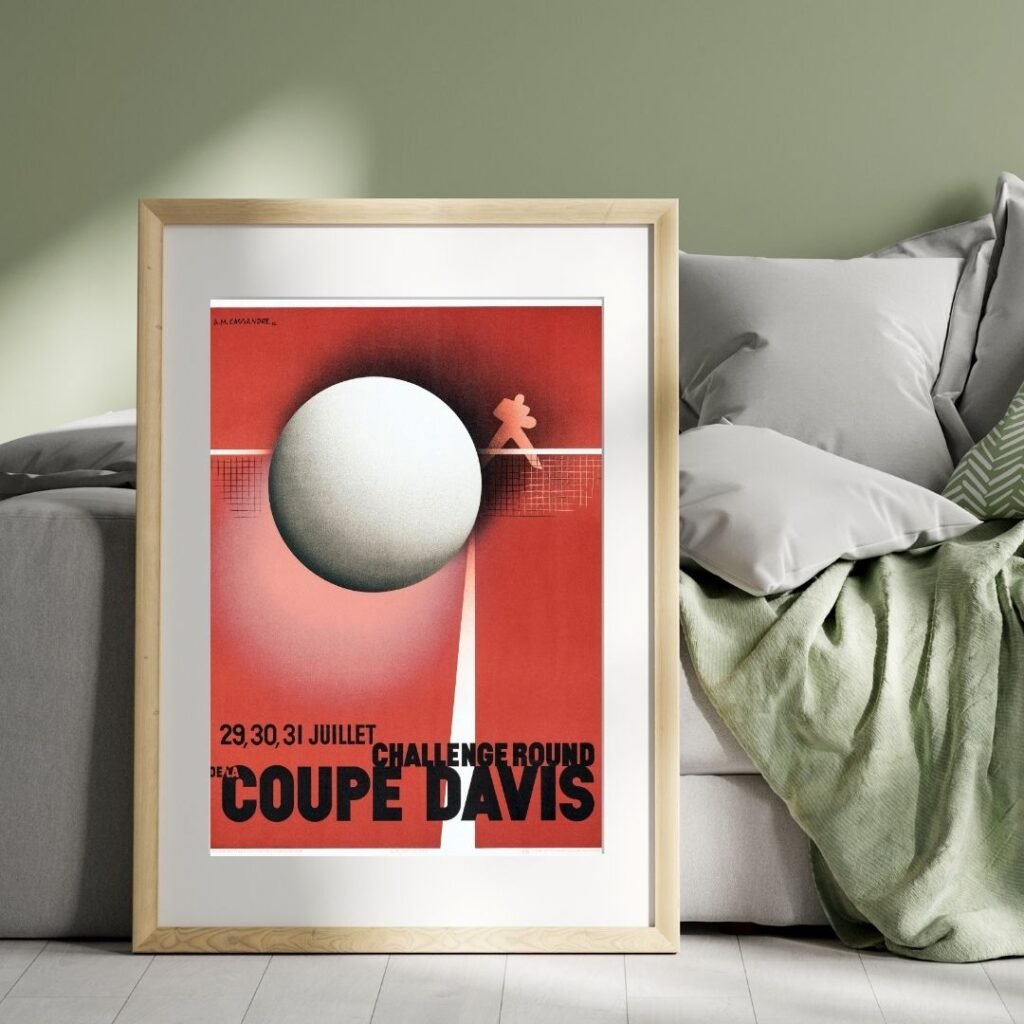
Art Deco is a useful way into the poster’s visual context. The style is associated with an appetite for order and modernity, expressed through geometry, simplified forms and carefully organised lettering. In a sporting image, those qualities can make athletic movement feel composed rather than accidental.
A poster has to work differently from a photograph of a match. Type must share the space with imagery, while the competition’s name needs to remain legible as part of the design. The result can suggest both the speed of play and the formality of an international event.
For a broader view of the style beyond sport, Art Deco’s modern world on paper explores its place in graphic culture. The label describes an approach to design, not evidence that a particular artist or studio made this poster.

From the tennis court to the race circuit
Tennis and motor racing offer different kinds of spectacle, but their event posters share a practical problem: how to give a competition a recognisable identity on a single sheet. A title, a place or a championship name can do some of that work before a viewer knows anything about the contest itself.
The Brooklands 200 Miles Race poster offers a comparison from motor racing. Its subject is a named race rather than a meeting between national tennis teams, yet both catalogue entries place the event at the centre of the artwork’s identity.
Neither title alone tells us how the original posters were displayed or distributed. What the comparison does reveal is the usefulness of an event name: it can introduce the sporting occasion while giving the design its reason to exist.
The sporting event as a graphic identity
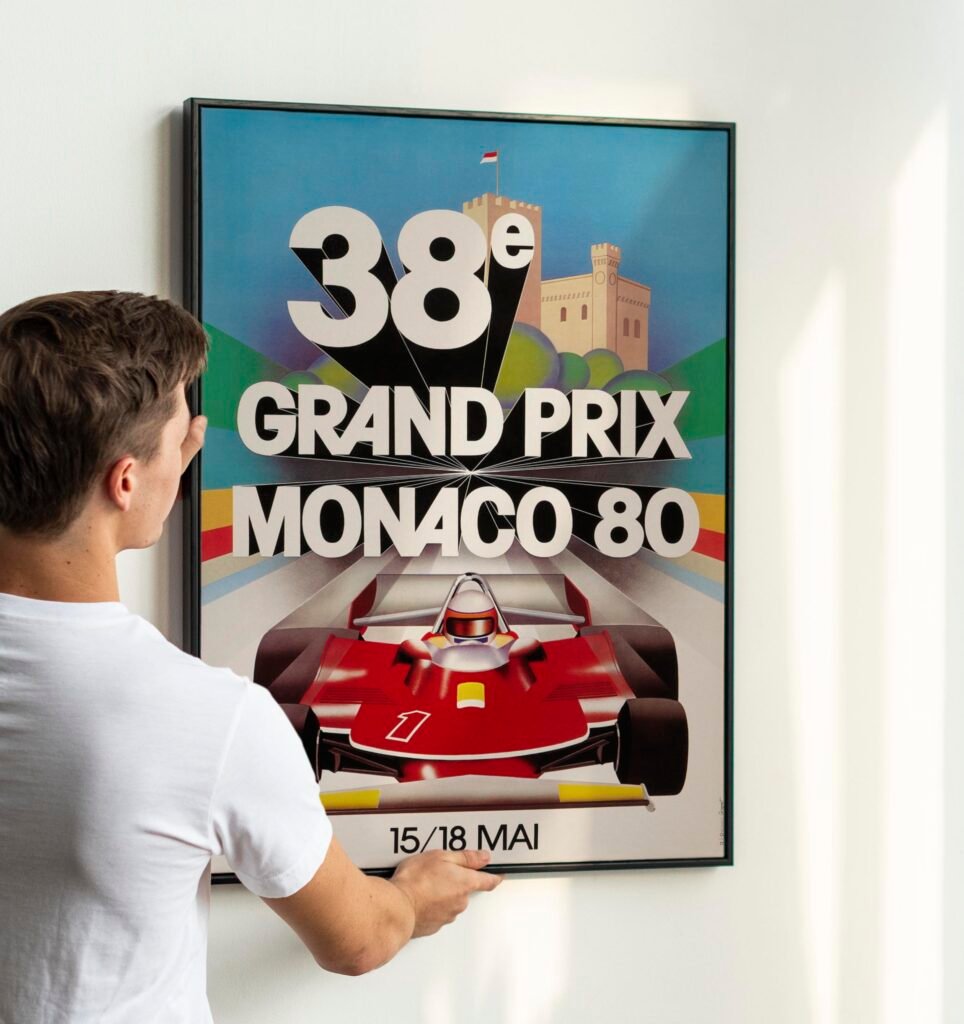
The 1980 Monaco Grand Prix poster provides a later point of comparison. Its title identifies a race, a place and a year, tying the design to a particular edition of an established sporting occasion. It should not, however, be treated as evidence of the 1932 poster’s style or production history.
Together, the tennis and racing examples suggest why event posters remain interesting after the contests they promoted. They are records of how a sporting occasion was presented to an audience, as well as objects that can be read for their typography and composition.
The 1932 design invites both readings. Its Davis Cup identity connects it to international team tennis; its catalogue description places it within an Art Deco tradition. The precise event details and the hand behind the artwork remain questions for further research.
Shop the collection
 Brooklands 200 Miles Race Vintage Motor Racing Poster Price range: $5.50 through $230.00
- Charlie Parker, Miles Davis and Django Reinhardt Paris International Jazz Festival Poster 1949 Price range: $5.50 through $230.00
- Iconic Jazz Poster Charlie Parker Birdland 1950s Concert Poster Price range: $5.50 through $230.00
- B.B. King, Cold Blood, J. Geils Band 1970 Boston Tea Party Concert Poster Price range: $5.50 through $230.00


Frequently asked questions
Who designed the 1932 Davis Cup poster?
The catalogue listing does not name a designer. An attribution would need to be checked against a reliable source.
Did the Davis Cup always feature national teams?
The competition is associated with teams representing nations, rather than the individual entry format familiar from major tennis tournaments.
Explore sporting posters
Explore sporting artwork from tennis, motor racing and other competitions in the PulpPoster catalogue.