

Blog, CONCERT POSTERS
Jimi Hendrix and the Jimi Hendrix Experience
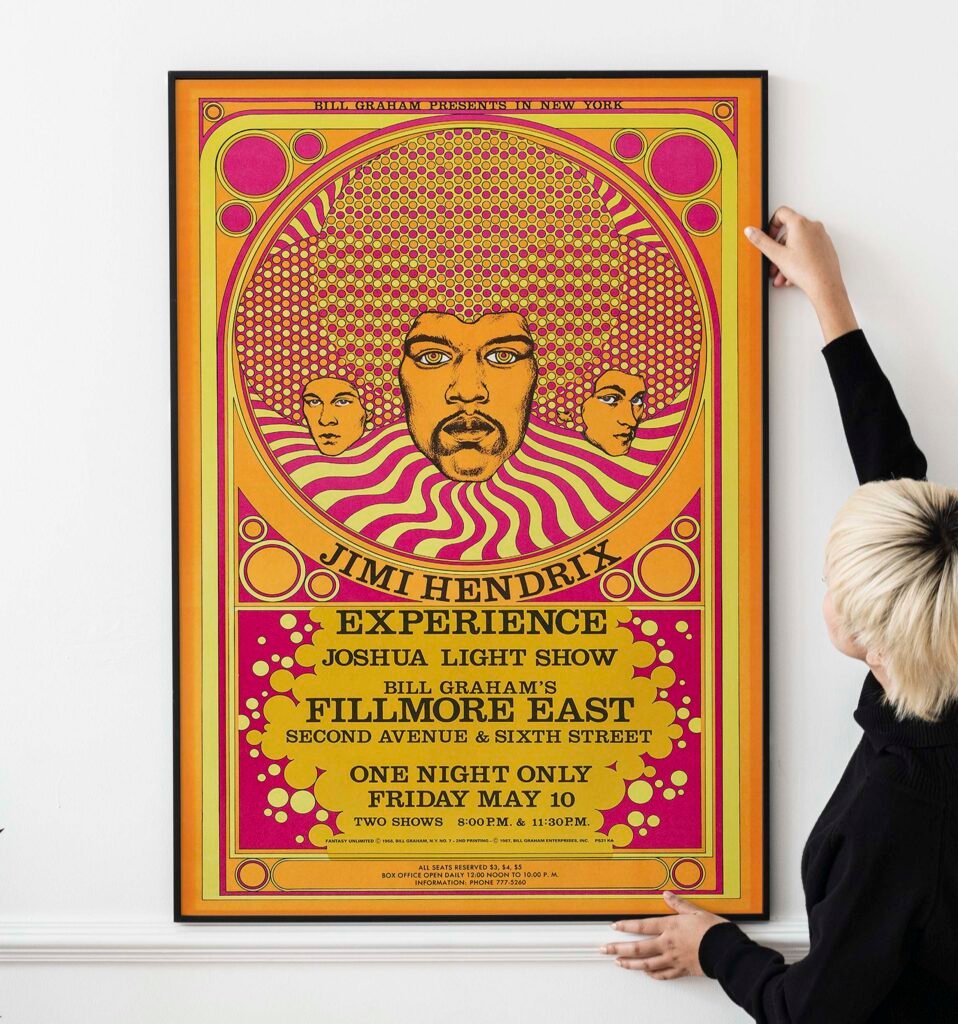
Oct
Jimi Hendrix: A Trailblazing Musical Journey with the Jimi Hendrix Experience
Jimi Hendrix, a name that resonates through the annals of music history, stands as an iconic figure whose revolutionary approach to the guitar redefined the boundaries of rock, blues, and psychedelia. Born on November 27, 1942, in Seattle, Washington, James Marshall Hendrix, later known as Jimi, would ascend to become one of the most celebrated and influential guitarists in the world. His meteoric rise to fame, characterized by mind-bending guitar solos, unparalleled creativity, and an enigmatic stage presence, was propelled by his collaboration with the groundbreaking band, the Jimi Hendrix Experience.
Formed in London in 1966, the Jimi Hendrix Experience comprised Hendrix himself as lead vocalist and virtuoso guitarist, Noel Redding on bass, and Mitch Mitchell on drums. The trio’s musical synergy was nothing short of electrifying, serving as the perfect vehicle for Hendrix’s artistic ingenuity. Their debut album, “Are You Experienced,” released in 1967, announced their arrival with a seismic shockwave. Fusing psychedelic rock with bluesy undertones, the album featured hits like “Purple Haze,” “Hey Joe,” and “Foxy Lady,” showcasing Hendrix’s spellbinding guitar techniques, including his signature use of feedback, wah-wah, and distortion.
Hendrix’s mastery over his instrument was a revelation, transcending conventional norms. He coaxed sounds from his guitar that seemed otherworldly, channeling emotions and narratives through every note. The Jimi Hendrix Experience’s live performances, marked by Hendrix’s mesmerizing showmanship—often punctuated by playing the guitar with his teeth or behind his back—garnered them a cult-like following, making them one of the most sought-after acts of their time.
In 1968, the band released “Axis: Bold as Love,” an album that delved deeper into experimental soundscapes. It was a testament to their evolution as musicians, showcasing their ability to blend genres and push artistic boundaries. The album featured tracks like “Little Wing” and “If 6 Was 9,” displaying both Hendrix’s lyrical finesse and his intricate guitar work.
The pinnacle of the band’s career arrived with their performance at the Woodstock Festival in 1969. Hendrix’s rendition of “The Star-Spangled Banner” on his guitar, distorting the anthem into a searing commentary on the state of the world, remains an indelible moment in music history—a demonstration of his ability to intertwine music and socio-political commentary.
Tragically, the Jimi Hendrix Experience’s journey was cut short. In 1970, after the release of “Electric Ladyland,” Hendrix’s final studio album with the band, tensions within the group led to its disbandment. Hendrix’s untimely death on September 18, 1970, at the age of 27, marked the end of an era and left the world mourning the loss of a musical genius.
The legacy of Jimi Hendrix and the Jimi Hendrix Experience endures to this day. Hendrix’s influence is palpable in the playing styles of countless guitarists who followed, and his music continues to captivate new generations. His exploration of sound, his audacious experimentation, and his unapologetic individualism set a precedent for artistic expression that reverberates through genres.
In conclusion, Jimi Hendrix’s collaboration with the Jimi Hendrix Experience epitomized a revolutionary moment in music history. Their audacious blend of rock, blues, and psychedelia, coupled with Hendrix’s unparalleled virtuosity, left an indelible mark on the cultural landscape. Through their music, they challenged norms, ignited imaginations, and immortalized themselves as pioneers of sonic innovation.
