
Blog
Sam Cooke and Jackie Wilson: An R&B Poster’s Story
Nov
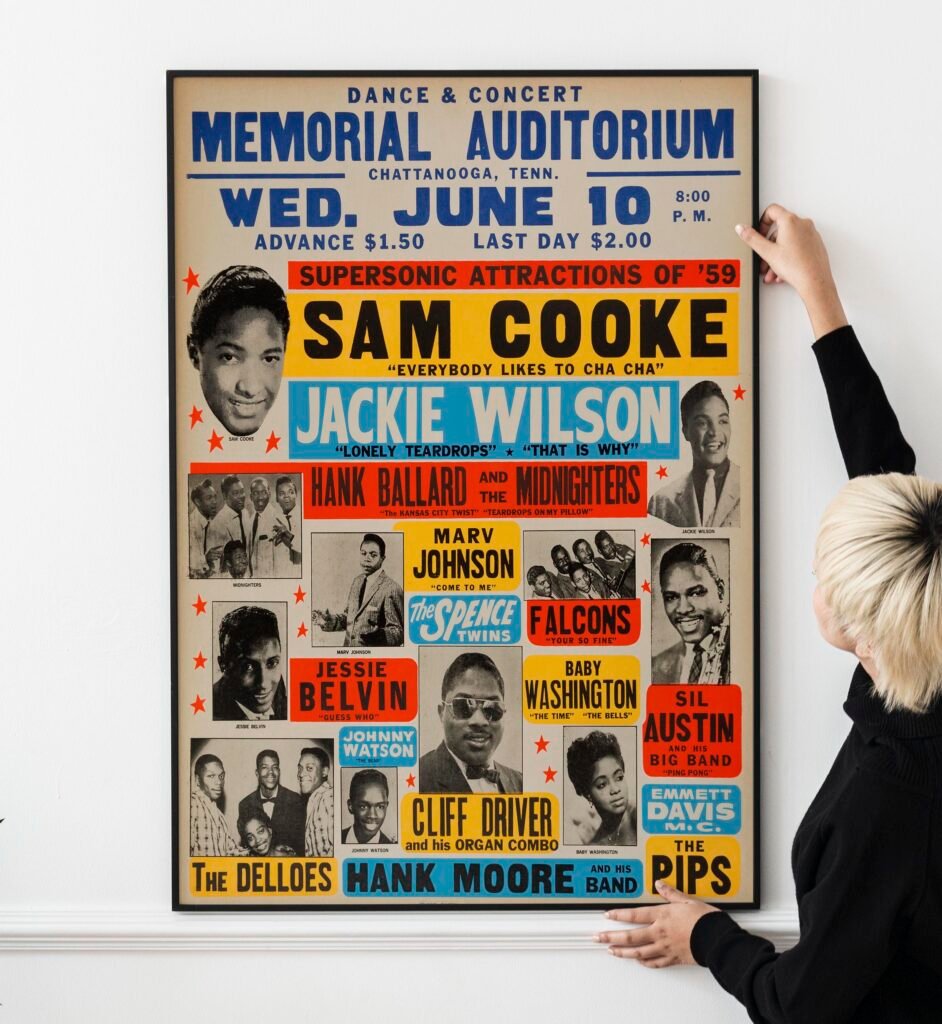
Sam Cooke and Jackie Wilson are names associated with two distinctive styles of American popular singing. The Sam Cooke Jackie Wilson concert poster brings them together in a reproduction whose catalogue details raise an intriguing question: what, exactly, was the show?
The answer needs more research. In the meantime, the listing opens a window onto the possibilities and limits of the multi-artist concert poster.
Two voices, different kinds of drama
Cooke’s singing could sound conversational even when the melody carried a strong emotional charge. Wilson was known for a more overtly dramatic delivery and an athletic stage presence. Both worked in the broad territory where rhythm and blues and soul met, but their appeal was not identical.
That difference is part of the interest of a shared bill. A listener drawn by one singer might encounter another with a contrasting way of turning a lyric into a performance. A poster could promise variety without needing to explain either artist’s entire career.
The names also point towards a period when categories such as R&B and soul described overlapping musical worlds rather than sealed compartments. The wording of a concert advertisement could bring those worlds together on a single page.
A date that needs a closer look
The shop lists a Sam Cooke and Jackie Wilson print as a reproduction of an original poster. Its title describes the work as a 1959 R&B concert poster, while its tags include 1963 concert and 1960s tour. Those descriptions do not establish which date is correct.
Before treating the listing as a record of a particular night, the date, venue and full bill need to be checked against the artwork and independent evidence. The catalogue information supplied here does not confirm what the poster itself says, where the names appear or whether the singers performed together at the advertised event.
That distinction matters. A reproduction can preserve an arresting piece of concert advertising, but its catalogue title is not the same thing as a verified event history. Even the phrase Biggest Show Stars, which appears among the listing’s tags, needs checking against the image before it is treated as poster wording.
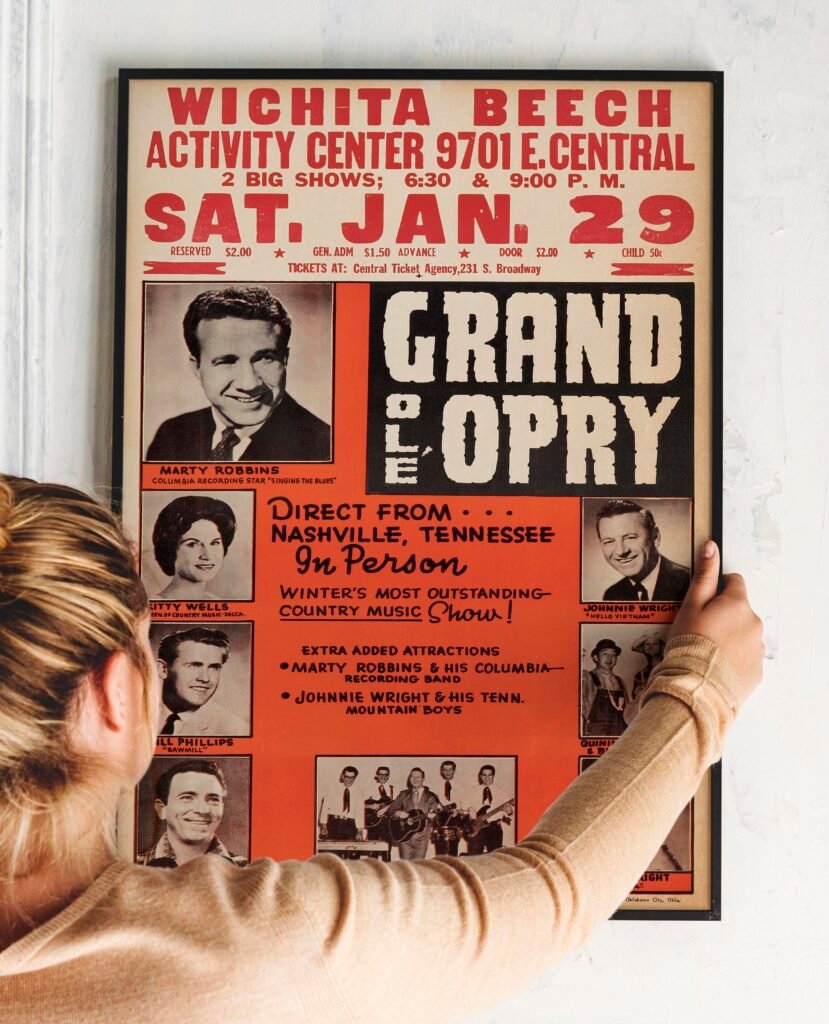
What a shared bill can tell us
A multi-artist poster has several jobs at once: it must make the show recognisable, introduce the acts and give an audience a reason to attend. Names, their relative prominence and the surrounding event details can all help explain how a bill was presented.
If the Cooke and Wilson artwork is available to inspect, its layout offers questions worth asking. Are their names given equal weight? Are other performers listed, and does the wording describe a tour, a single show or something else? Answers would reveal how the advertisement framed the occasion, not necessarily what happened on stage.
The distinction between a bill and a collaboration is important too. Sharing an advertisement does not by itself mean that performers sang together, or that every named act appeared at every stop. A poster is evidence of what was promoted; an account of the concert needs more.
Beyond one night’s advertisement
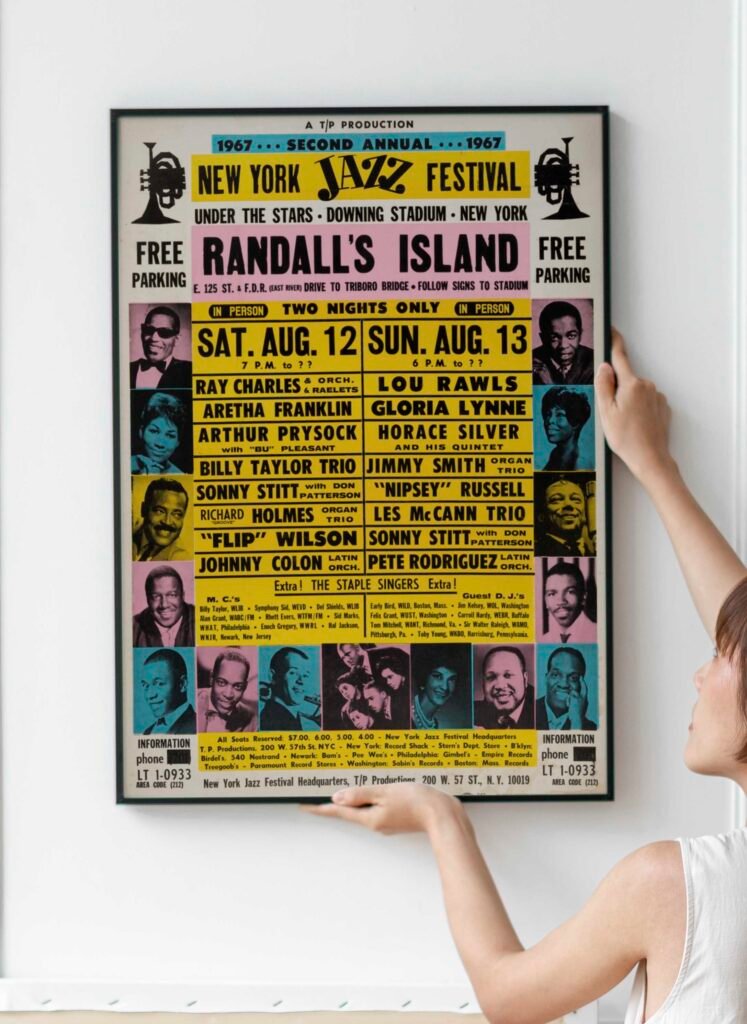
The catalogue also lists a Ray Charles and Aretha Franklin festival poster, identified by its title with a New York jazz festival. It offers another example of performers’ names brought together in a concert-poster listing, though its event details would likewise need checking against the artwork.
Comparing such listings is a reminder that a poster’s subject is not just a musical genre. It is also an occasion: a proposed meeting of performers, promoters and audiences, compressed into an advertisement.
For a different perspective on music advertising, the journal’s article on Miles Davis and John Coltrane turns to two club posters. Together, these objects invite a closer reading of the relationship between an artist’s name and the setting in which it was presented.
Shop the collection
 Johnny Cash, June Carter, Carl Perkins 1967 Waterloo, IA Concert Poster. Price range: $5.50 through $230.00
- Led Zeppelin 1976 The Song Remains The Same Vintage Concert Poster Price range: $5.50 through $230.00
- Rare Dizzy Gillespie Retro Concert Poster – 1960s Jazz Festival, Trumpet Icon Price range: $5.50 through $230.00
- Dizzy Gillespie 1960s Jazz Poster – "Concert Under the Stars" Des Moines, Vintage Bebop Poster Art Price range: $5.50 through $230.00


Frequently asked questions
Does the Sam Cooke and Jackie Wilson poster document a 1959 concert?
The catalogue title says 1959, but a product tag says 1963. The date needs to be checked against the poster and independent evidence.
Were Sam Cooke and Jackie Wilson soul singers?
Both are associated with soul and rhythm and blues, although their vocal styles and stage personas were distinct.
More music on paper
Explore concert poster reproductions featuring artists from soul, jazz and beyond.