Blog
Led Zeppelin in Tokyo: A 1971 Tour Poster’s Story

Nov
Led Zeppelin brought their guitar-led rock to Japan in 1971. A Led Zeppelin Tokyo 1971 concert poster keeps the band, the city and that year together in one image, but its title alone leaves much of the story open.
The catalogue listing offers a way into the visual language of concert promotion, and a reminder that a reproduction is not necessarily a record of the event it appears to advertise.
A Japanese tour, and an unanswered question
Led Zeppelin’s music drew on blues as well as the forceful sound that came to be associated with hard rock. By the early 1970s, the British group had an audience far beyond Britain, and its Japanese visit placed that international reach in a particular city and moment.
Tokyo in a poster title is a useful starting point, not a complete account of an engagement. A tour can include more than one performance in a city, and a poster may promote a single show, several dates or a wider tour.
For the Tokyo listing, the specific performance date, venue and original promotional purpose remain unverified. The listing describes the print as a reproduction; that does not, by itself, establish when the underlying design was made or how it was first used.
What the poster’s title can and cannot tell us
A concert poster has a practical problem to solve: it must make a performance identifiable and give its intended audience a reason to look more closely. The performer’s name carries recognition, while a place or date can turn that recognition into a specific occasion.
The listed title of the Led Zeppelin Tokyo poster brings those elements together: band, city and year. It is tempting to read that combination as a complete historical record, but the catalogue title is not evidence that every detail appeared on an original advertisement.
Nor can the intended audience be identified from the title alone. An advertisement for people attending a Tokyo show would have had a different immediate job from an image made later for fans remembering the tour. Checking the wording and layout of the artwork, alongside a dated original, would help distinguish those possibilities.
The listing mentions a patina, a surface effect that gives the reproduction an aged appearance. That finish belongs to how the print is presented now; it cannot establish the age of the design or prove that a particular copy was displayed in 1971.
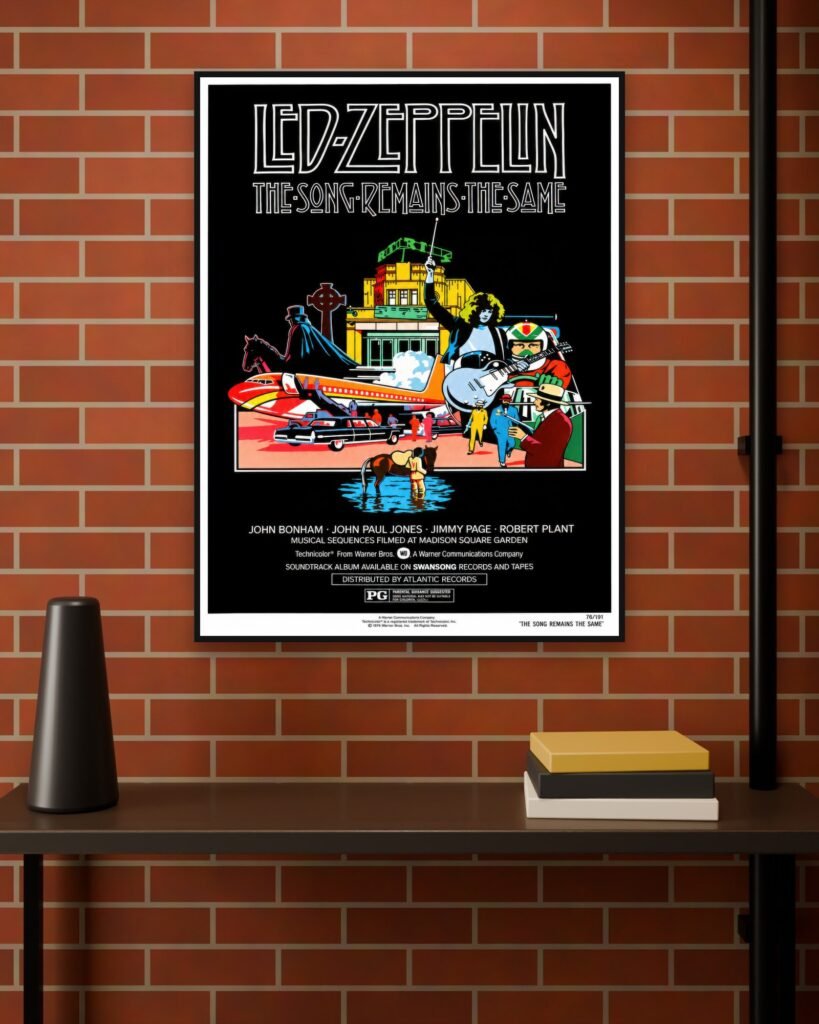
Single names and shared bills
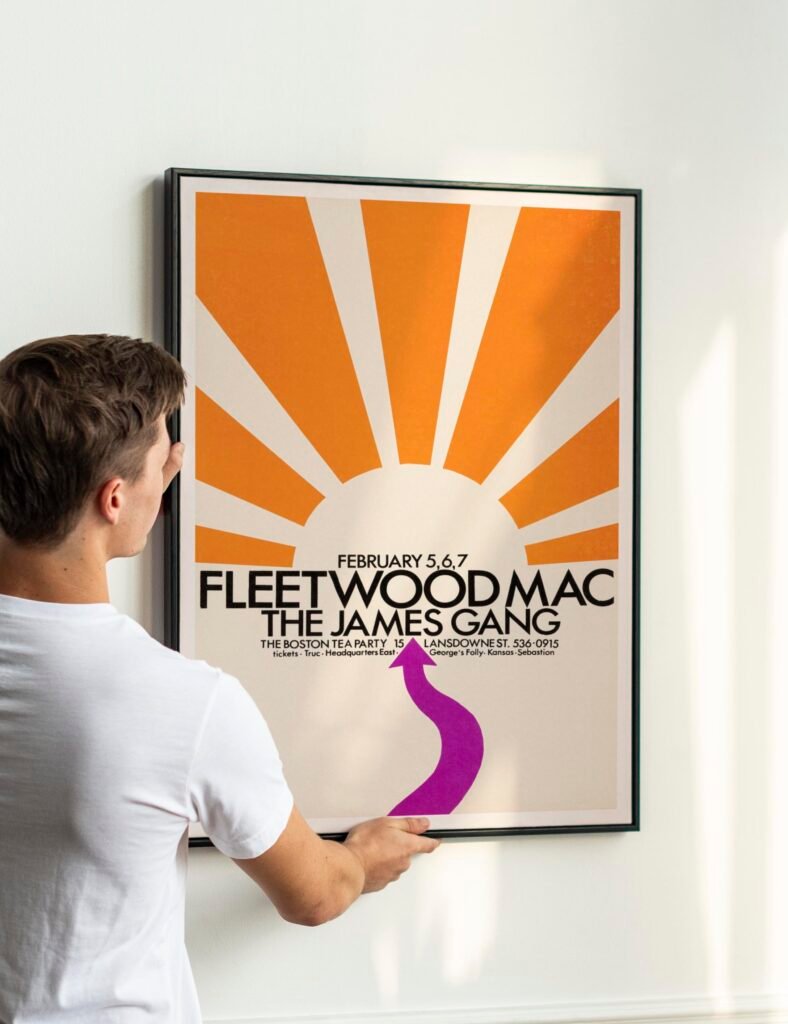
The catalogue’s Fleetwood Mac and The James Gang poster offers a different proposition in its title: two acts share the billing. Where a single-band title centres one name, a shared bill presents a relationship between performers and invites a reader to consider the event as a programme.
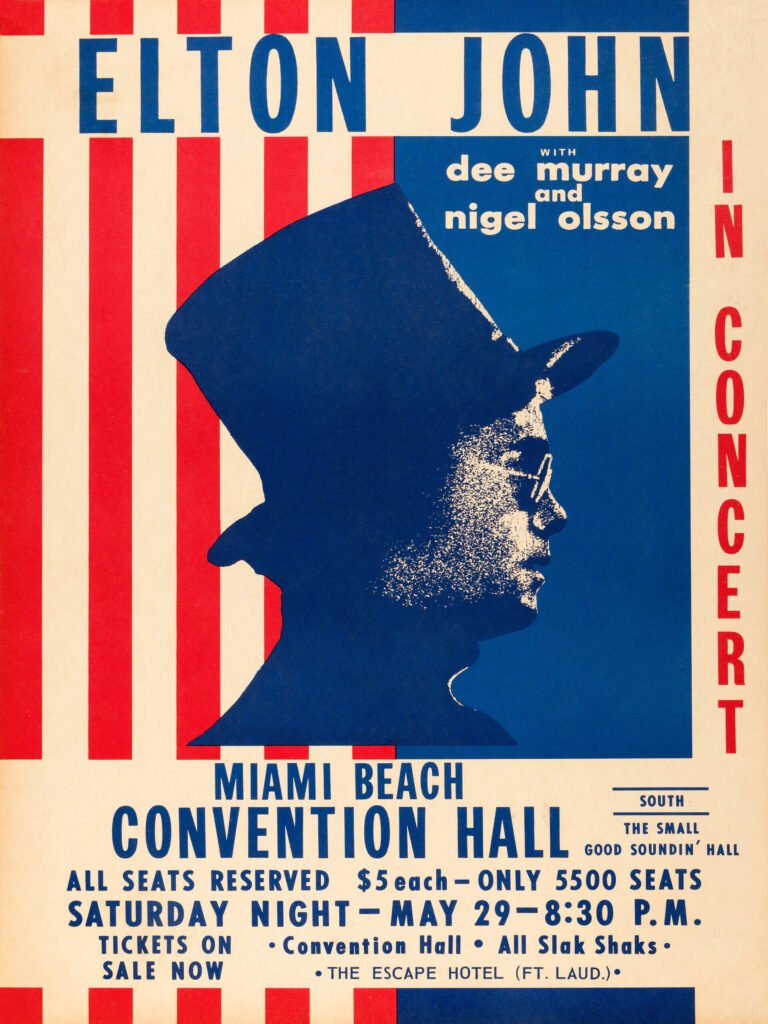
The Elton John early concert poster, listed with the year 1971, puts the emphasis back on one performer. Together, the listings show how a year, a place and a bill can frame a piece of music history in different ways.
Those comparisons have limits. The catalogue titles identify the subjects, but without checking the artwork and its sources they do not tell us who designed the posters, where the originals appeared or whether the reproductions preserve every detail of an earlier version.
From concert announcement to rock memory
Concert posters sit between publicity and memory. Their original purpose can be immediate: to announce an event to people who might attend. Once that event has passed, the same subject can also prompt questions about a band’s audience, the route of a tour and the way a performance was presented.
Reproductions add another layer. They allow an image associated with a past concert to circulate in the present, but their appearance should not be confused with evidence of an individual print’s history.
For the Tokyo poster, the most revealing next step is not to invent the missing story but to compare the design with documented tour dates and a reliable record of the original artwork. Only then can its place in Led Zeppelin’s Japanese tour be described with confidence.
Shop the collection
 Trans Continental Pop Festival Original Concert Poster 1970 Price range: $5.50 through $230.00
- Jimi Hendrix, Allman Bros. Band 1970 Atlanta Pop Festival Concert Poster Price range: $5.50 through $230.00
- Texas International Pop Festival Poster 1969 Price range: $5.50 through $230.00
- Led Zeppelin 1973 Florida Concert Poster – Classic Rock Tour Art Price range: $5.50 through $230.00


Frequently asked questions
Did Led Zeppelin play in Japan in 1971?
Yes. The band toured Japan in 1971, but the precise event represented by the Tokyo poster needs to be checked against reliable tour and poster records.
Is the Tokyo poster an original from 1971?
PulpPoster describes its listing as a reproduction. The date and promotional history of the design it reproduces have not been verified here.
More stories in concert art
Explore concert poster reproductions featuring Led Zeppelin and other performers.